

How Long-Life Fleet Livery Helps Build a More Sustainable Business
posted 1st July 2026
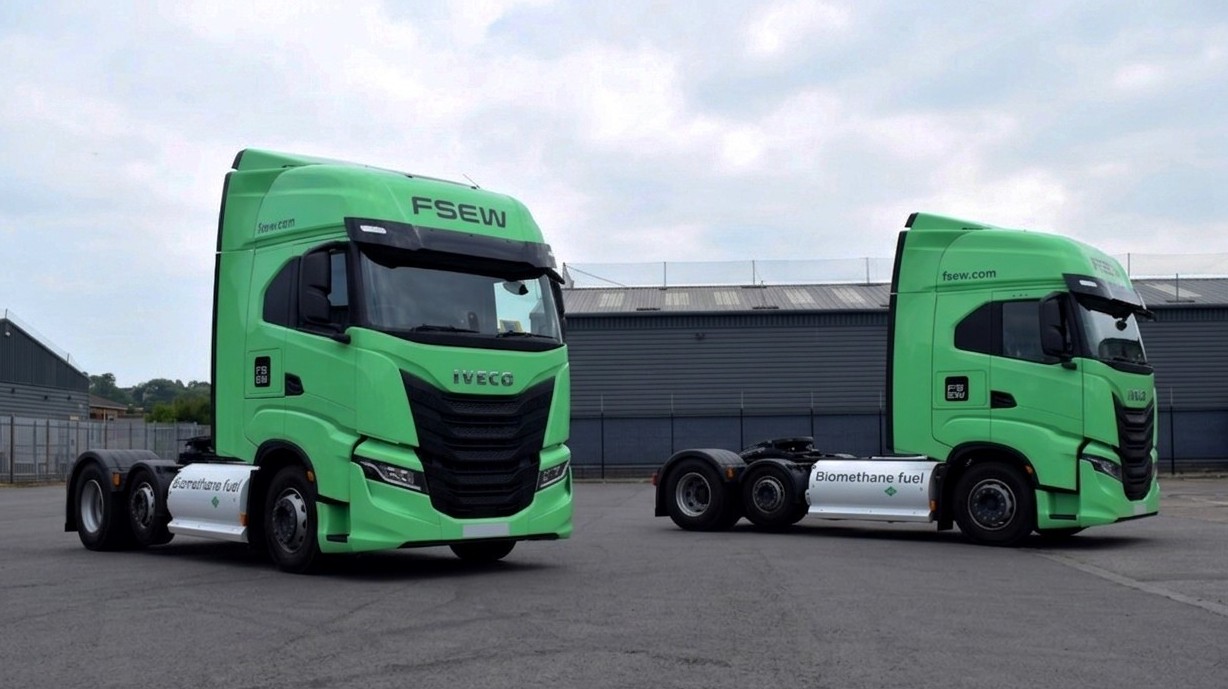
Businesses across the UK face intensifying pressure to eliminate waste, streamline operations, and demonstrate authentic environmental stewardship. Whether driven by customer expectations, strict procurement frameworks, mandatory ESG reporting, or internal sustainability targets, one truth is undeniable: every commercial decision now carries an environmental footprint.

Fleet branding is no exception.
For decades, vehicle graphics were viewed purely as a mobile marketing tool designed to build local brand awareness and generate leads on the road. Today, forward-thinking fleet managers recognise that high-performance, long-life fleet livery delivers far more than just visual impact.
📢 New to fleet branding? Read our Ultimate Guide to Vehicle Wraps to discover how modern wrapping technology lays the groundwork for commercial sustainability.
When engineered and executed properly, premium vehicle wraps actively contribute to a highly efficient, sustainable fleet operation. While using vinyl to drive green metrics might seem counterintuitive at first, analysing the complete lifecycle of a fleet graphics programme reveals clear, undeniable environmental benefits.
The Fleet Graphics Lifecycle 4 Pillars of Sustainability
Waste Reduction
Premium, long-lasting materials keep vinyl out of landfills by dramatically extending wrap lifespans.
Lower Demand
Fewer replacements mean less raw manufacturing, shipping, and chemical processing over time.
Extended Service
Consistent, fresh branding preserves paintwork and allows assets to stay in service longer.
Precision Install
Accredited, professional application eliminates premature edge lifting and material failure.
The ultimate result is a high-utility branding solution that works harder, stands up to the elements, and consumes significantly fewer resources throughout its deployment.
In this actionable guide, we will unpack how investing in durable fleet livery directly supports your corporate sustainability goals - without sacrificing visual impact, operational performance, or marketing ROI.
Sustainability Starts Long Before a Vehicle Is Wrapped
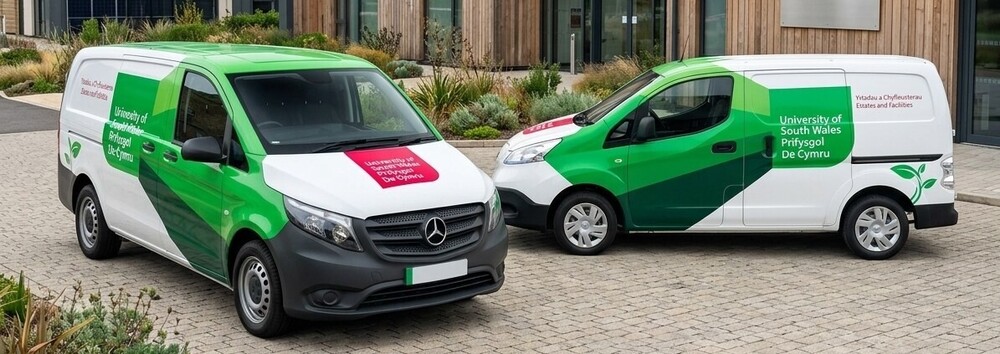
When fleet managers consider sustainable vehicle graphics, the conversation usually focuses entirely on the vinyl material itself. While selecting eco-conscious materials is a critical component of green logistics, true environmental responsibility begins much earlier in the planning pipeline.
Every strategic design decision ripples through your entire carbon footprint. To build a genuinely sustainable commercial fleet branding strategy, project stakeholders must address several critical operational factors well before production begins.
The Pre Wrap Sustainability Checklist
Expected Lifespan
Are the specification choices built to match or exceed the operational service cycle of the fleet vehicle?
Replacement Cycles
Does the branding model actively prevent the need for disruptive, waste-heavy annual reapplications?
Modular Evolution
Can marketing details or campaign messages change seamlessly without tearing down the entire base graphic layout?
Material Selection
Are the substrates specifically calibrated to survive long-term atmospheric exposure and intensive fleet cleaning regimes?
Waste Minimisation
Will the layouts and nested panels be handled by engineering systems configured to reduce raw offcut scrap during production?
These pre-production decisions hold significantly more environmental weight than most businesses realise.
For example, opting for a budget graphics package that requires removal and replacement every twenty-four months inevitably doubles your material consumption, transport emissions, and waste output. Conversely, investing in premium, high-performance fleet livery engineered to maintain a pristine finish for many years creates a dramatically lighter footprint.
Ultimately, the most sustainable vehicle graphics are the ones you do not have to replace.
Long-Life Fleet Graphics Reduce Material Consumption
Every single time commercial vehicle graphics are removed and replaced, a substantial amount of environmental and operational resources are consumed.
This resource drain stretches far beyond the visible vinyl face-film; it demands the manufacturing and eventual disposal of fresh over-laminates, heavy-duty adhesives, chemical release liners, protective transit packaging, and localised shipping materials.
Furthermore, the hidden environmental costs of transport logistics, specialised removal chemicals, and intensive installation labour multiply with each cycle.
When lower-quality materials fail prematurely, this disruptive replacement loop occurs repeatedly, causing a company's indirect environmental footprint to scale aggressively. High-performance, long-life fleet graphics break this unsustainable cycle.
Instead of stripping down and re-wrapping commercial assets every two to three years, forward-thinking enterprises deploy durable fleet livery that maintains an immaculate, professional appearance throughout the entire operational service life of the vehicle.
By locking in branding longevity, organisations drastically suppress aggregate material consumption across their entire logistics infrastructure.
For businesses managing dozens or hundreds of assets, these individual resource savings compound into massive, quantifiable sustainability victories.
Short Life Fleet Graphics
Frequent removal and reapplication cycles increase operational fleet downtime.
Substantially higher lifetime material consumption across multiple vehicle lives.
Elevated volume of non-recyclable backing liners and old vinyl sent to landfills.
Repeated supply chain emissions from multi-stage printing, shipping, and travel.
Long Life Fleet Livery
Engineered explicitly for permanent, multi-year commercial asset branding performance.
Drastically reduces overall vinyl substrate demand over your operating lifecycle.
Minimises supply chain disturbances, freeing up administrative and logistics resource.
Strengthens corporate environmental credentials to satisfy green procurement audits.
Durability Is an Environmental Benefit
When evaluating commercial sustainability, material durability is frequently overlooked in favour of flashy product labels. Yet, structural durability remains one of the single most powerful mechanisms for reducing long-term environmental impact.
A high-performance fleet wrap that is engineered to endure harsh weather, intensive washing, and high road mileage year after year systematically prevents repetitive cycles of raw material extraction.
By locking in visual and structural performance, premium graphics completely bypass unnecessary production phases. This prevents wasteful manufacturing runs, eliminates repeating freight transit emissions, and completely cuts out the specialised labour required for frequent asset tear-downs and reinstallations.
This critical lifecycle intersection is exactly why modern logistics companies evaluate vehicle graphics based on whole-life value rather than upfront procurement cost.
The calculation is straightforward: the longer an asset branding system continues to perform flawlessly, the lower its annualised environmental cost and capital depreciation become.
High-quality fleet livery operates on this exact same principle of commercial and ecological efficiency.
The Whole Life Graphic Efficiency Model
Year 1
Initial Output
Highest environmental impact occurs during raw substrate printing and local application assets.
Year 2
Amortisation
Durability prevents early fading. Annual carbon footprint decreases by 50% as branding stays active.
Year 3
Sustainability Matrix
Budget vinyl alternatives fail here. Premium wraps continue protecting underlying body panels cleanly.
Year 4
Resource Dividends
Zero new manufacturing materials required. Marketing impressions scale with net-neutral footprint updates.
Year 5+
Maximum Value
Absolute lowest environmental impact per year. Proven corporate asset lifetime performance realised.
Better Planning Creates Less Waste
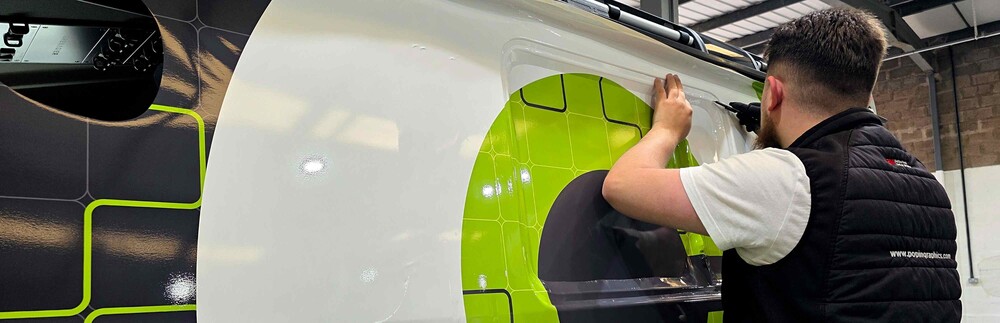
True commercial sustainability extends far beyond the chemical composition of your chosen materials; it is deeply rooted in intelligent planning and tactical engineering.
A sophisticated fleet branding programme anticipates future vehicle acquisitions, planned structural retirements, and mid-cycle branding updates right from the initial brief.
Instead of commissioning highly fragmented, disjointed redesigns every single time a new commercial vehicle or replacement van variant joins the operational matrix, sustainable enterprises construct universally scalable branding architectures.
These flexible identity frameworks are digitally mapped from the outset to deploy consistently across vastly different wheelbases, roof heights, and chassis types. By prioritising cross-platform layout standardisation, operations managers fundamentally eliminate repetitive design revisions and dramatic substrate print waste.
This proactive framework limits costly pre-production file configuration errors and prevents the resource-heavy, unnecessary reprints that plague uncoordinated rollouts.
Furthermore, it streamlines long-term vehicle onboarding schedules.
Establishing an agile, predictable identity template transforms commercial fleet graphics into a highly efficient, asset-protective tool tailored for growing corporations.
Strategic Planning Architecture Waste Reductions
Design Revisions
Universal templating cuts administrative time spent reworking assets across disparate vehicle models.
Substrate Print Waste
Optimised grouping on high-yield printers reduces unprinted margins and roll offcuts.
Production Errors
Standardised print files remove ambiguity, lowering manufacturing risk at the facility.
Unnecessary Reprints
Accurate initial mapping ensures panel dimensions match exactly on arrival, avoiding rework.
Keeping Vehicles in Service for Longer
Professional vehicle graphics do far more than turn commercial assets into high-converting mobile billboards; they act as a sacrificial barrier that shields factory paintwork from everyday operational wear.
On the road, fleet vehicles encounter constant environmental stressors that steadily degrade a company's visual identity and asset value.
While vinyl wraps should never be classified as heavy armor plating, their material composition offers resilient, everyday defense against these common operational hazards:
Phase 01
UV & Sun Exposure
Shields factory paintwork from deep atmospheric UV degradation and costly finish oxidation.
Phase 02
Road Debris & Stones
Absorbs flying gravel impact damage during high-speed motorway logistics operations.
Phase 03
Light Scratches
Deflects superficial abrasions from roadside hedges, cargo handling, and tight delivery bay lines.
Phase 04
Surface Abrasion
Prevents micro-frictions from mechanical cleaning brush systems from dulling the vehicle gloss layers.
Phase 05
Harsh Weathering
Forms an airtight barrier against corrosive winter road salt sprays and heavy localised rain streaks.
Phase 06
Chemical Staining
Resists permanent marking from chemical environmental drops, tree sap, and aggressive traffic films.
By preserving the original paint layers beneath a durable wrap, businesses operating on structured lifecycle agreements retain considerably higher asset value. When it comes time for de-fleeting, remarketing, or lease return disposal, vehicles present a clean, unblemished finish that commands maximum resale premium while completely eliminating costly body shop reconditioning.
More importantly, extending the immaculate appearance of existing vehicles serves as a core sustainability pillar. Keeping current transit assets looking professional for longer periods empowers organisations to lengthen their replacement timelines safely.
Maximising the service life of a vehicle before manufacturing a replacement represents the absolute cleanest path to green fleet management.
Sustainable Fleet Branding Supports ESG Goals
Many modern commercial enterprises now actively audit and report performance against strict Environmental, Social, and Governance (ESG) objectives.
Given their substantial daily energy demand and high corporate visibility, transport logistics and mobile fleet operations naturally sit at the very centre of these crucial corporate conversations.
Transitioning away from short-life, disposable branding systems to premium, long-life fleet livery provides procurement managers with a tangible, audit-ready mechanism to satisfy complex green procurement requirements.
This structural upgrade directly supports mandatory corporate sustainability metrics focused on mitigating operational waste, maximising raw resource efficiency, and extending the operational product life of transport assets. While vehicle graphics alone will not completely transform an overarching corporate ESG strategy, they represent a highly visible, practical operational decision that collectively drives more responsible supply chain management.
For organisations developing wider sustainability frameworks, consulting independent advisory bodies like the Carbon Trust provides invaluable guidance on lowering overall environmental impact, cutting Scope 3 carbon emissions, and building long-term operational resilience.
The Sustainable Fleet Livery Lifecycle Model
01. Design
Universal optimisation prevents asset substrate print margins.
02. Print
High-yield nested graphics printing limits scrap production.
03. Installation
Accredited technical layout protects factory edge lines cleanly.
04. Service Life
Premium livery sustains structural branding for multiple years.
05. Asset Change
Extended deployment avoids early commercial replacement needs.
06. Removal
Adhesive engineering strips cleanly without paint panel damage.
07. Recycling
Waste material routes cleanly into emerging sustainable circles.
Premium Materials Make a Difference
Not all vehicle films are created equally. High-performance commercial vehicle branding relies on premium cast vinyl engineered specifically to endure the extreme demands of long-term fleet deployment.
Unlike economy calendered alternatives, premium films maintain structural integrity under continuous stretching, preventing cracking, shrinking, or lifting away from deep vehicle recesses.
Selecting commercial-grade vehicle wrap materials calibrated to match your fleet's exact operational life avoids premature failure.
These heavy-duty substrates feature advanced chemical formulations that provide immense dimensional stability, exceptional surface conformability, and elite weatherproofing layers.
Investing in professional vinyl graphics ensures a strict balance between aesthetic brand consistency and asset longevity.
Choosing durability over upfront cost stops failing materials from prematurely entering the waste stream, optimising your corporate environmental profile.
Swipe Left to View Full Table
| Material Core Metric | Premium Cast Fleet Vinyl Impact | Sustainability ROI Result |
|---|---|---|
| Dimensional Stability | Resists shrinkage, cracking, and edge lifting under extreme climates. | Extends Service |
| Excellent Conformability | Moulds seamlessly over deep vehicle channels and complex panel curves. | Zero Early Rework |
| Durable Adhesives | Maintains an airtight, long-term bond that peels away cleanly at de-fleet. | Protects Paint |
| Superior Weathering | Deflects aggressive UV rays, highway salt abrasion, and chemical soot. | Net Waste Cut |
| Visual Consistency | Retains vivid brand colour depth and high gloss without severe fading. | Brand Security |
Design Consistency Reduces Future Waste
Commercial enterprises frequently execute full-scale corporate rebrands much more often than necessary simply because their existing vehicle graphics quickly look dated or obsolete. Opting for temporary, trend-led graphic treatments creates an expensive cycle of early removals and total wrap replacements.
Developing a classic, meticulously considered corporate fleet identity breaks this pattern completely.
Aesthetic designs that strictly prioritise layout simplicity, crisp motorway readability, and modular vector scaling naturally maintain visual authority for significantly longer periods.
By building a timeless baseline layout, businesses ensure their vehicle graphics remain effective throughout the physical service cycle of each transport asset. This disciplined approach to fleet branding cuts out unnecessary graphic redesigns, drastically lowers marketing overhead, and stops vast volumes of vinyl and chemical waste from entering local landfills ahead of schedule.
Simplicity
Minimalist, balanced visual layouts preserve a clean look that outlasts temporary design trends.
Readability
High-contrast typography choices guarantee effortless identity comprehension at high road speeds.
Consistent Branding
Uniform corporate identities build strong market familiarity without requiring frequent visual updates.
Scalable Layouts
Flexible geometry scales flawlessly across compact vans, panel trucks, and heavy artics alike.
Fleet Downtime Has an Environmental Cost Too
Replacing commercial vehicle graphics is never an isolated event confined strictly to material degradation.
When graphics require premature removal, the true ecological toll extends deep into operational logistics and mobile resource consumption. Vehicles must be diverted from their daily routes and driven to specialised installation facilities, directly burning fossil fuels or drawing heavily on grid electricity.
Furthermore, field technicians must travel to sites, specialised production equipment must run intensive power cycles, and a brand-new layer of transit packaging is consumed and discarded.
The administrative strain of scheduling, re-routing assets, and absorbing vehicle downtime introduces massive operational inefficiencies across your supply chain.
Every single graphics replacement cycle carries broad environmental and financial penalties that exist entirely outside the physical vinyl substrate.
Consequently, prioritising durable materials that lower your total replacement frequency automatically cuts down these hidden, systemic logistical carbon costs.
Swipe Left to View Full Matrix
| Operational Area | Frequent Replacement Strategy | Long Life Fleet Livery Strategy |
|---|---|---|
| Logistics Fuel |
High Waste Vehicles must repeatedly drive back and forth to wrapping depots every 12-24 months. |
Optimised One single trip handles branding for the vehicle's entire multi-year frontline career. |
| Transit Packing |
Multiplied Scrap Generates continuous waste layers of heavy delivery cardboard tubes and shrink-wrap. |
Drastically Reduced Bypasses years of rolling transport packing requirements entirely. |
| Workshop Power |
Repeating Draw Triggers high electricity consumption loops for industrial print machinery and warm-room curing. |
Single Lifecycle Event Limits workshop machine operating hours to a singular pre-launch application. |
| Fleet Downtime |
Lost Field Hours Vans sit completely out of commercial service for repeating tear-down and install days. |
Maximum Utilisation Assets spend years consistently active on deployment routes without graphic interruption. |
Sustainable Procurement Looks Beyond Purchase Price
Forward-thinking corporate procurement teams are fundamentally shifting how they evaluate major asset acquisitions. Instead of focusing narrowly on low upfront purchase costs, modern supply chain managers utilise rigorous lifecycle costing models to identify deep whole-life value.
Rather than asking which option demands the smallest capital layout today, they analyse which solution delivers the lowest total cost of ownership and the lightest environmental footprint over its entire operational career.
This strategic procurement philosophy aligns perfectly with professional, high-performance fleet branding programs.
While premium vehicle graphics require a slightly higher initial specification investment, they systematically eliminate repeating operational expenses over the vehicle's lifespan. By choosing durability, organisations actively minimise material replacement frequencies, cut down technical maintenance calls, eliminate costly service routing disruptions, and drive down aggregate lifetime material consumption.
It is a dual victory that simultaneously protects corporate budgets and matches strict environmental targets.
This lifecycle model is becoming exceptionally critical as organisations aggressively transition toward electric commercial vehicles (EVs).
In the modern decarbonisation landscape, choosing sustainable branding parameters is no longer an afterthought - it forms a core component of early infrastructure fleet planning.
Organisations introducing electric assets into their logistics grid must account for specialised application techniques, thermal parameters, and zero-emission goals.
To ensure your branding aligns seamlessly with zero-emission tech, explore the unique material design and technical installation configurations covered in our dedicated guide to electric van wraps.
Traditional Procurement
"Which vehicle wrap option costs the absolute least today?"
Focuses strictly on low initial invoices. This single-minded focus overlooks rapid material failures, repetitive strip-down labor, and multiplying shipping emissions that heavily inflate overall life expenses.
Sustainable Procurement
"Which layout delivers the greatest value over its operational lifetime?"
Prioritises premium cast substrates engineered to protect panels for 5-7+ active field years. Drastically reduces long-term replacement frequency, eliminates operational downtime, and secures superior fleet asset resale returns.
Maintaining Fleet Graphics Helps Them Last Longer
Even the absolute best commercial-grade substrates on the market require disciplined, structured care to reach their maximum design lifecycle.
Implementing a standardised, preventative fleet maintenance wrap care regime is one of the easiest ways to safeguard your visual branding assets while systematically avoiding the waste of premature replacements.
Establishing these basic operational care habits keeps your mobile branding looking pristine and professional for years. It is critical to integrate regular yet careful washing into your logistics routine while completely banning aggressive, industrial-strength chemical solvents that dry out and degrade vinyl face-films.
Furthermore, operations teams must train wash crews to safely remove highly acidic contaminants, such as bird droppings and tree sap, before they bond to the laminate surface.
Finally, performing rapid, visual wrap inspections during scheduled mechanical service checks allows workshops to identify and repair minor edge snags or isolated panel damage. Addressing these microscopic issues early stops moisture ingress from spreading beneath the adhesive layers, adding years of active service to your commercial fleet graphics investment.
Regular Gentle Washing
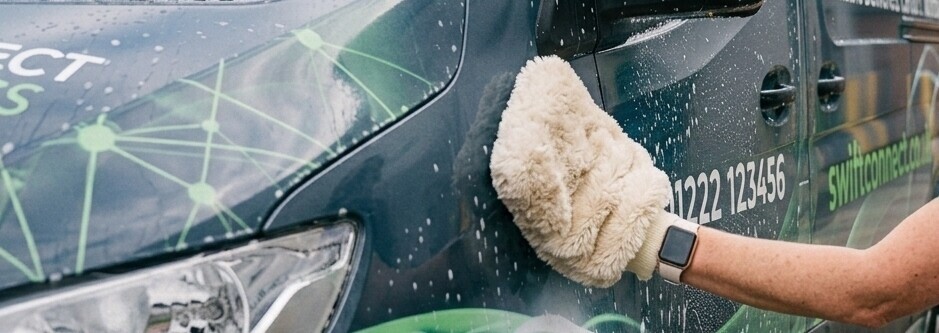
Utilise soft sponge wash mitts and low-pressure water streams to rinse road grit safely. Avoid pressure washers.
Avoid Harsh Chemicals
Ban aggressive, high-pH caustic traffic film removers that dull laminate gloss coatings over time.
Prompt Contaminant Removal
Spot-clean aggressive organic bird droppings immediately to prevent acid scoring on the vinyl face.
Routine Inspections
Incorporate graphic check-points right alongside standard mechanical or oil safety fleet checkups.
Isolated Edge Repair
Trim or reseal localised micro-peels instantly to prevent moisture or jet-washes from lifting the wrap panels.
Sustainability Is About Better Decisions Not Perfect Ones
There is no such thing as a completely impact-free mobile branding solution. Because every single manufactured substrate carries an inherent environmental footprint, achieving flawless ecological perfection is an unrealistic target.
Instead, the real milestone for modern logistics operations is making significantly better, resource-efficient choices at each stage of a vehicle's lifecycle.
For organisations aiming to rapidly optimise their supply chain frameworks, consulting independent sustainability bodies like WRAP (Waste & Resources Action Programme) provides excellent, practical guidance on structural waste reduction and circular material usage.
Building a truly green transit identity relies entirely on a connected chain of smart operational habits: specifying premium cast materials, requiring accredited technical installations, executing protective cleaning maintenance, and implementing universally scalable design templates.
When managed together under a unified strategy, these incremental lifecycle actions completely block premature vinyl replacements.
The net result is a highly effective mobile advertising campaign that drives powerful brand awareness while systematically lowering your long-term environmental footprint.
The Long Life Strategy Conclusion
True commercial fleet sustainability isn't achieved by a single material change. It is built by investing in premium durability, maximising vehicle active service cycles, and eliminating logistical replacement downtime entirely.
Sustainability Isn't Just About Recycling
When evaluating environmental responsibility, waste recycling frequently dominates the corporate conversation. While establishing responsible post-consumer disposal channels is a critical operational parameter, the most significant, high-impact environmental victory remains extending product service lifespans at the point of origin.
Executing the comprehensive design, technical manufacturing, and specialised installation of a vehicle wrap once over a multi-year cycle is fundamentally more resource-efficient than repeatedly re-wrapping assets with low-grade substrates.
In green logistics, long-term material longevity is the most powerful sustainability metric a fleet operator can ever control.
The Core Environmental Win
Recycling manages waste after it has already been created. Longevity prevents the creation of waste entirely. Prioritising lifecycle durability cuts down resource depletion across your vehicle logistics supply chain.
Aligning Commercial Impact with Fleet Longevity
High-performance fleet livery proves that marketing impact and environmental responsibility do not have to compete. A long-life graphics strategy improves brand visibility while systematically reducing replacement cycles and lowering lifetime material waste.
Sustainability isn't achieved through a single product change. It is built through informed, daily decisions that prioritise quality, longevity, and responsible resource management.
“
”
Investing in fleet graphics engineered to last isn't simply a commitment to sustainable branding. It is an investment in a highly strategic, low-waste business model built for the long term.